


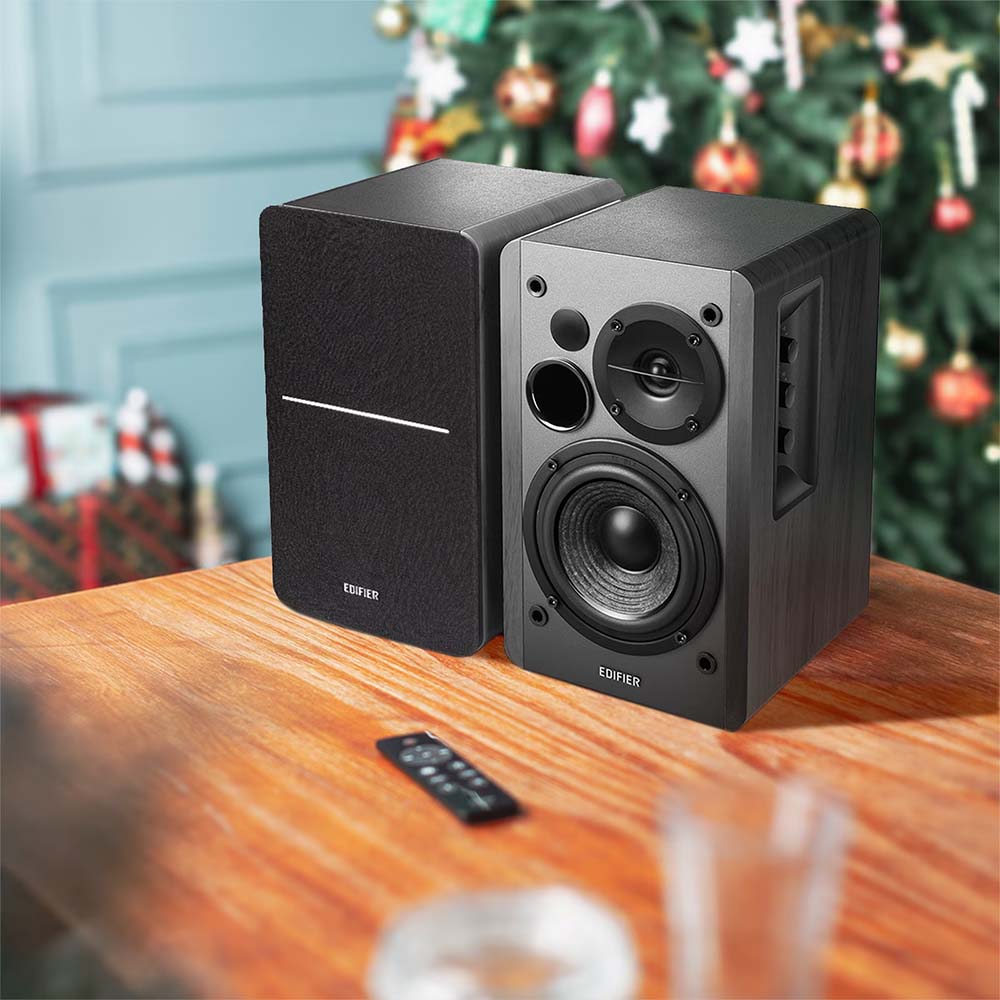
Edifier R1280DBs Speakers - Brown
Edifier R1280DBs - Speakers with Bluetooth, Digital Inputs and Sub Out
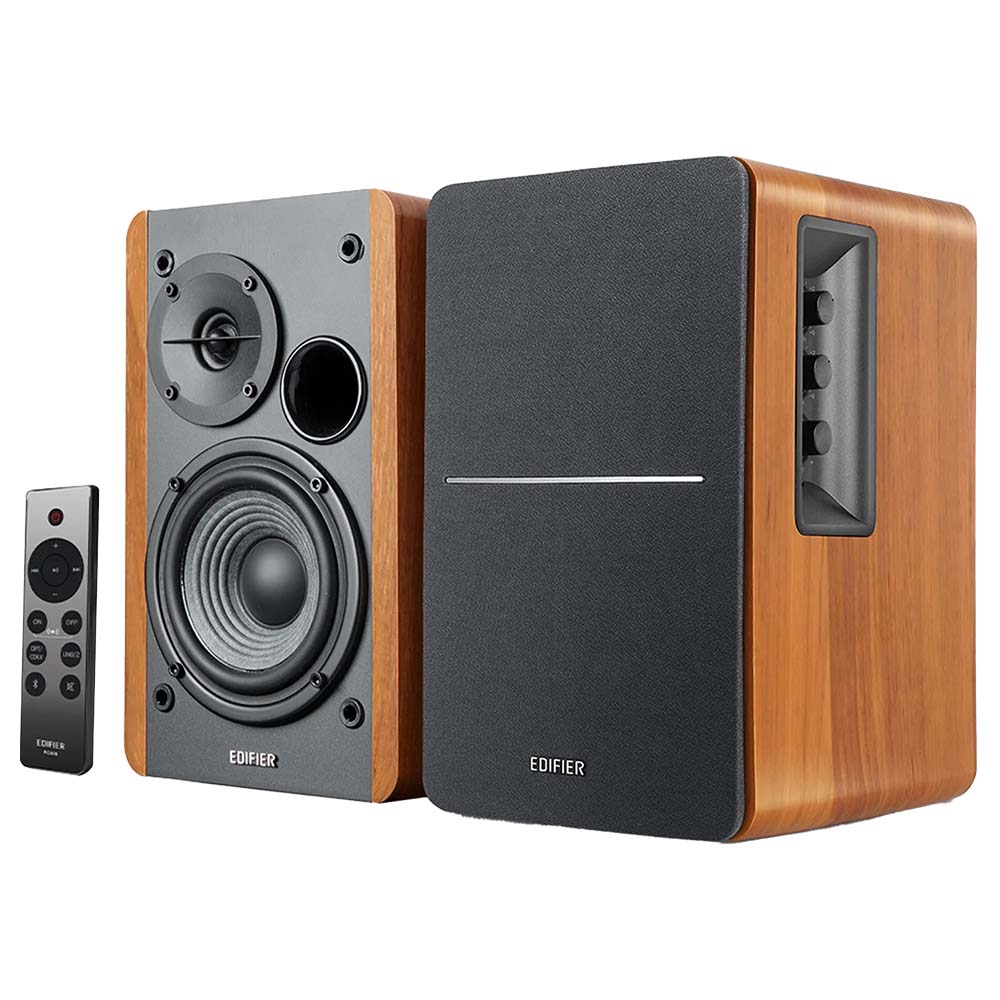
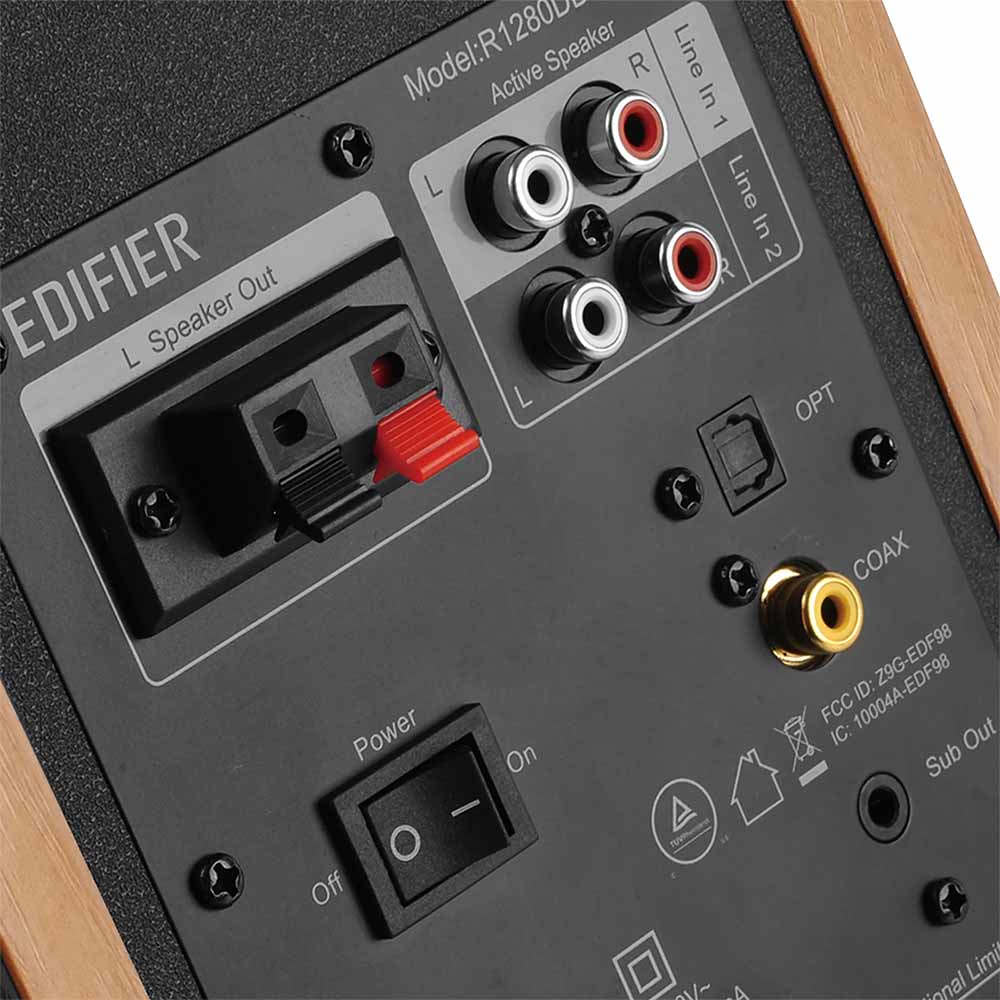
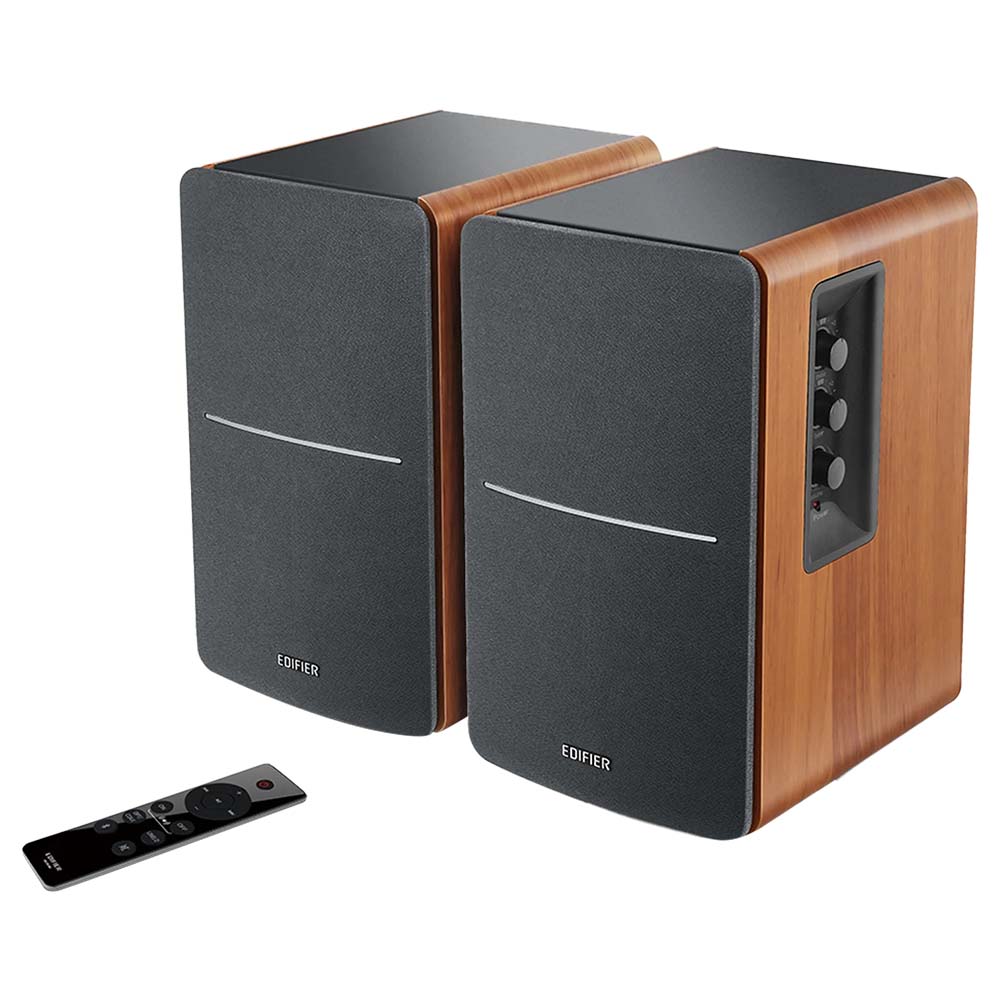
If the R1280DB is the model with every input and the R1280Ts the one with room to grow, the R1280DBs is both at once. Qualcomm Bluetooth, optical and coaxial inputs, two line inputs and a subwoofer output in a single cabinet. Four drivers develop 42 watts, a front-facing reflex port allows placement against a wall, and the remote keeps control within reach.
Key Highlights
- Five inputs plus sub out - Bluetooth, optical, coaxial and two line inputs
- 42 watts total power with response from 51Hz
- Qualcomm Bluetooth for a stable wireless connection
- Front-facing bass reflex port for placement near a wall
Technology & Benefits
Everything Connected at Once
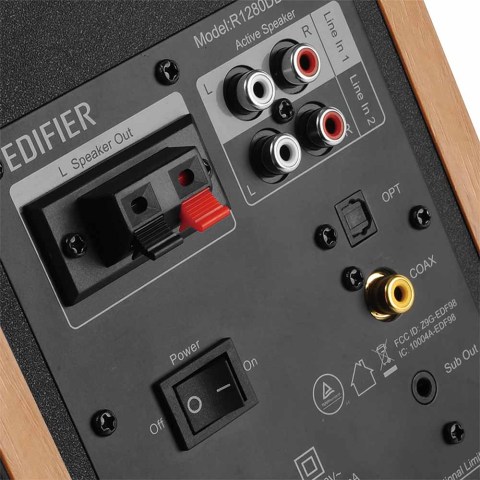
Optical and coaxial inputs take a digital signal from a TV, CD player or console. The two line inputs remain for a computer or a turntable with preamp, while Bluetooth covers the phone. No device needs unplugging to make room for another - switching happens from the remote.
Room to Grow
The subwoofer output turns the stereo pair into a 2.1 system whenever you want. Connect a powered subwoofer and you gain the low end that 4-inch drivers physically cannot deliver. The speakers stay as they are - only the system around them expands.
A Stable Wireless Connection
The Bluetooth module is Qualcomm's - the company behind the aptX codecs and most quality wireless audio solutions. The result is a connection that doesn't drop as you move around the room and recovers quickly if it does.
Four Drivers, 42 Watts
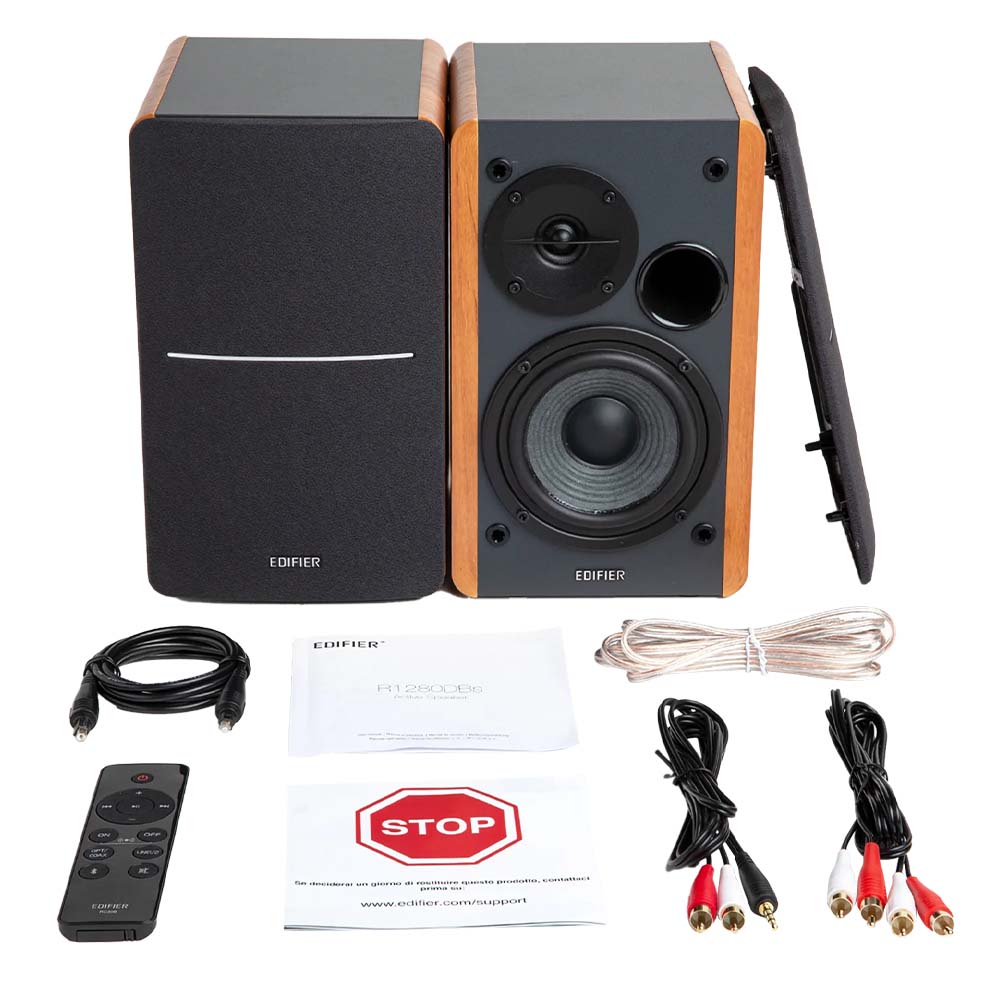
Two 4-inch mid-bass drivers carry most of the musical material and reach down to 51Hz. High frequencies come from half-inch silk diaphragm tweeters, with an active crossover dividing the signal before amplification - so each driver works only within its own band.
Front-Facing Reflex Port
The port sits at the front rather than the back. That's a practical difference: rear-ported speakers need space behind them, or the bass turns unruly. With the R1280DBs you can place them on a shelf or near a wall without sacrificing the low end.
Wooden Enclosure and Control
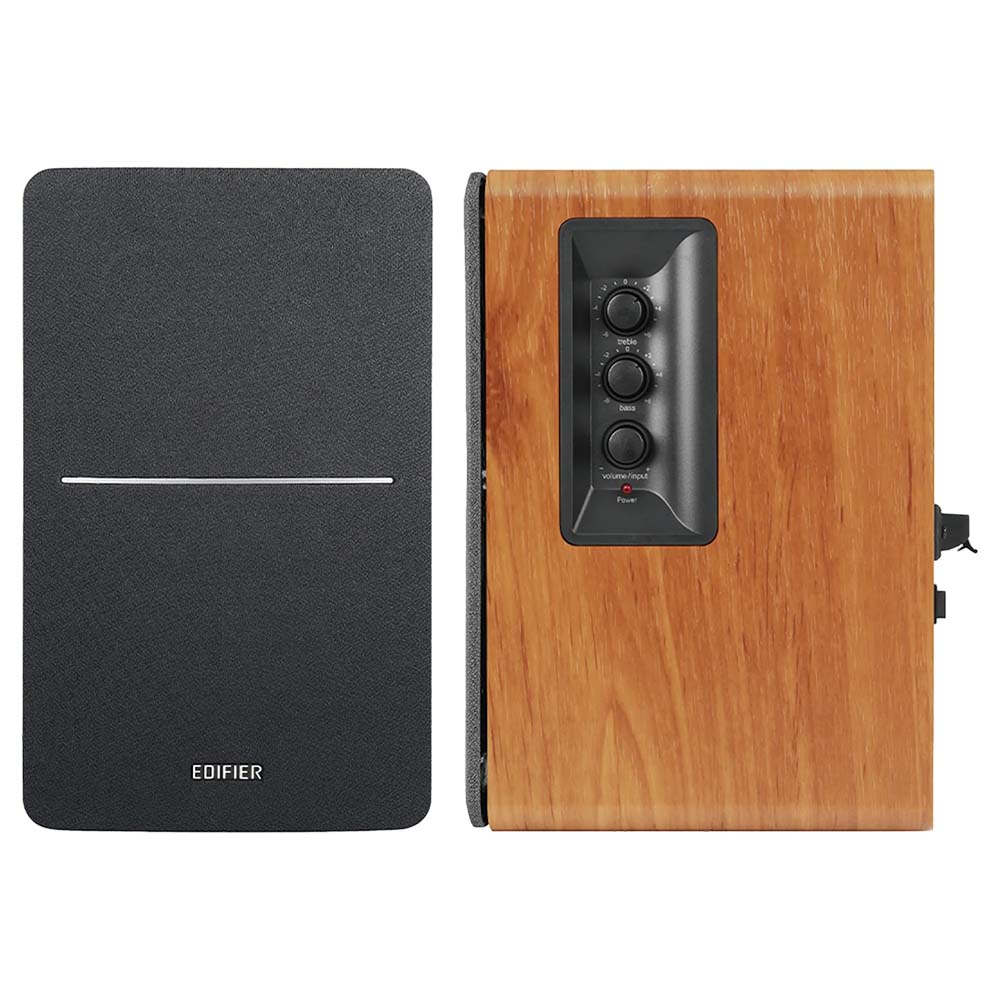
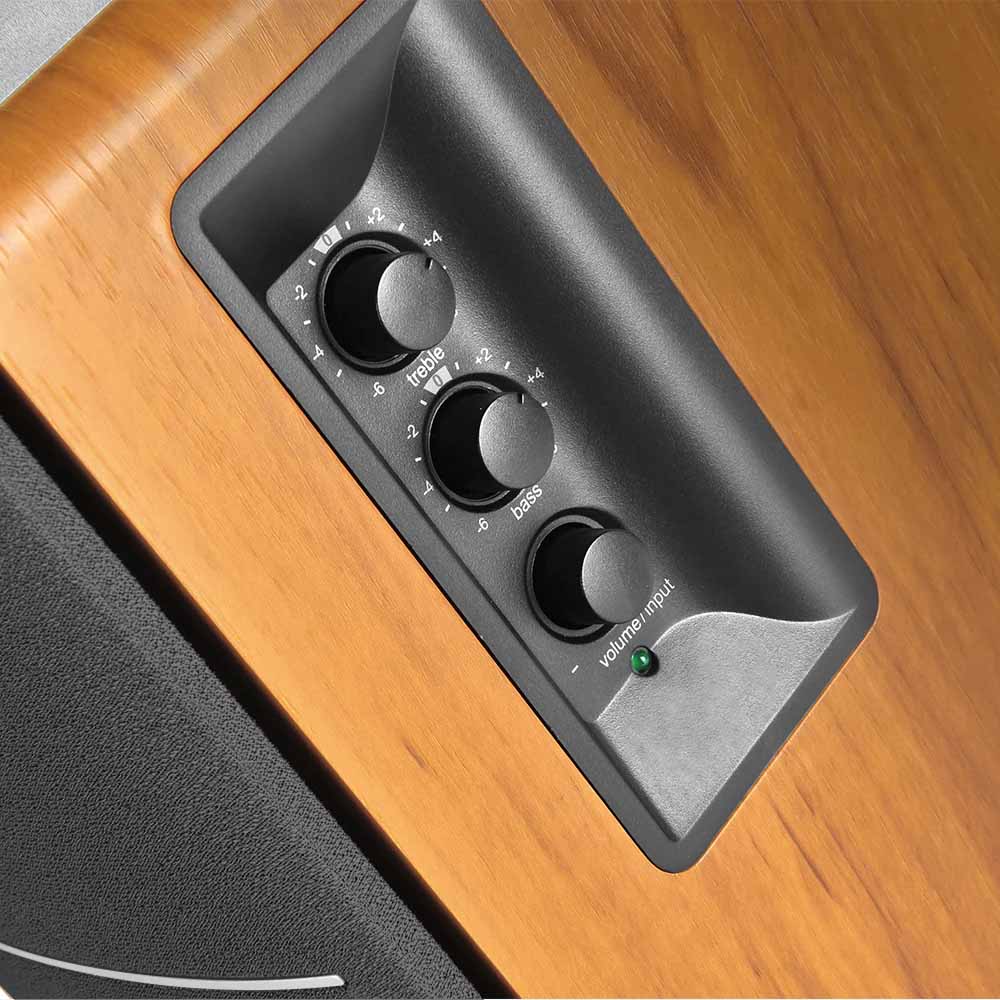
The dense wooden cabinet absorbs vibration rather than turning it into a sound of its own - the problem that in plastic boxes is heard as smeared bass. The remote handles volume and input selection from a distance, while side-panel knobs cover bass and treble.
Who Are They For?
R1280DBs is the most complete choice in the range - for people connecting several devices at once who want the option of adding a subwoofer later. It suits a living room with a TV, a study with a computer, or any space where one system has to cover everything.
What's in the Box
- Edifier R1280DBs speakers, two units
- Remote control
- Speaker connection cable
- RCA and optical cables
- User manual
Technical Information
- Type: Powered 2.0 bookshelf speakers, two-way
- Total output power (RMS): 21 W + 21 W
- Tweeters: 0.5" silk diaphragm
- Mid-bass drivers: 4"
- Frequency response: 51 Hz - 20 kHz
- Signal-to-noise ratio: ≥85 dB (A)
- Crossover: Active, two-way
- Inputs: Bluetooth, optical, coaxial, two line inputs (RCA)
- Output: Sub Out
- Bluetooth: Qualcomm module
- Reflex port: Front-facing
- Control: Remote and side-panel knobs
- Enclosure: Wood
- Dimensions (W x H x D): 146 x 234 x 196 mm (per speaker)
- Weight: 4.9 kg
Expert Tip from vsystem.bg
When connecting a TV, choose the optical input and set the output format to PCM in the TV's settings - the speakers don't decode Dolby or DTS, and Bitstream can leave you with no sound at all. The front port allows shelf placement, but leave a few centimetres at the sides so nearby objects don't rattle. If you add a subwoofer, set its crossover around 60Hz so it fills in beneath the speakers rather than being heard separately.
FAQ
What's the difference from the R1280DB?
R1280DBs adds a subwoofer output to the same set of inputs and the same drivers, while the frequency response reaches slightly lower - down to 51Hz.
What subwoofer should I add?
You need a powered subwoofer with a line input, meaning one with its own amplifier. The output carries signal rather than power.
Do I need an amplifier?
No. The amplifier is built into one speaker, with the other connecting to it by cable.
Will they work with a turntable?
Yes, provided the turntable has a built-in phono preamp or you use an external one. The connection goes through either of the two line inputs.
Can I place them near a wall?
Yes - the reflex port faces forward, which makes placement against a wall or on a shelf considerably easier than with rear-ported models.